
Reading Time: 7 min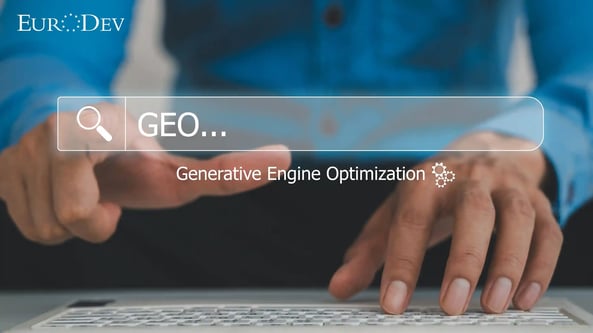
If you sell to businesses, your buyers are already turning to AI tools to shortlist vendors, compare options and work out how to solve a problem before they ever speak to sales. They get a synthesized answer, a handful of cited sources, and often never click a blue link. That is the shift GEO for B2B responds to, and in 2026 it is no longer a side experiment. It is part of how B2B demand is won or lost.
This guide explains what generative engine optimization is, how it differs from SEO, what genuinely changes (and what doesn’t), and a practical playbook you can start on this quarter.
What Is Generative Engine Optimization (GEO)?
Generative engine optimization is the discipline of making your brand and content the source that AI answer engines retrieve, trust and cite. “Generative engines” include Google’s AI Overviews and AI Mode, ChatGPT search, Perplexity, Microsoft Copilot and Claude with web search.
These systems work differently from classic search. Instead of returning ten ranked links, they break a question into sub-questions, retrieve passages from many sources, and compose one answer. Your page is no longer competing for a position. It is competing to be one of the few passages the model pulls into that answer. Search Engine Land’s guide to generative engine optimization describes GEO in similar terms: optimizing content so it is surfaced and cited by AI-driven search experiences.
You will also see this called AI search optimization, answer engine optimization (AEO) or LLM optimization. For practical purposes the goal is the same: AI search visibility, meaning how often and how favorably your brand appears in AI-generated answers for the questions your buyers ask.
Why GEO for B2B Is Different From B2C
GEO advice is often written with consumer examples: recipes, travel, product reviews. B2B behaves differently for four reasons.
- Longer, committee-driven journeys.
- Complex, specific queries.
- Trust and proof matter more.
- Smaller query volumes, higher value.
The result: B2B companies are among those with the most to gain from GEO, and the most to lose from ignoring it. If your category is being summarized by AI without you in the summary, competitors are effectively being recommended in your place.
SEO vs GEO: What Actually Changes?
The honest answer is less than the hype suggests, and more than most teams have adjusted for. Google itself says that the same foundational SEO practices apply to its AI features. Its Search Central documentation on AI features explains that there are no special technical requirements to appear in AI Overviews or AI Mode beyond being indexed and eligible to be shown with a snippet. So GEO is not a replacement for SEO. It is an extension of it, with a different success metric and some different tactics.
|
Dimension |
Traditional SEO |
GEO for B2B |
|---|---|---|
|
Goal |
Rank pages and earn clicks |
Be retrieved, cited and recommended inside AI answers |
|
Unit of optimization |
The page and its target keyword |
The passage, the entity (your brand) and the topic cluster |
|
Query style |
Short keywords, 2–4 words |
Long, conversational, multi-constraint prompts |
|
Core ranking signals |
Relevance, links, technical health, user signals |
Retrievability, clarity, factual consistency, authority and corroboration across the web |
|
Content format |
Keyword-targeted pages |
Self-contained answers, definitions, comparisons, tables, FAQs |
|
Off-site role |
Backlinks |
Brand mentions, reviews, third-party listings, expert citations |
|
Key metrics |
Rankings, organic traffic, conversions |
Citation share, brand mention rate, AI referral traffic, branded search lift, assisted pipeline |
|
Time horizon |
Months to rank |
Varies by platform; answers can change between runs |
|
Shared foundation |
Crawlability, indexing, quality content, E-E-A-T |
Same foundation, required before anything else works |
What stays the same
- Crawlability and indexing. If AI systems can’t access your content, they can’t cite it. Technical SEO remains the entry ticket.
- Helpful, people-first content. Google’s guidance on AI features points to the same principles it always has: create unique, valuable content for people.
- E-E-A-T. Experience, expertise, authoritativeness and trust matter even more when a model has to decide which source is safe to quote.
- Authority. Strong brands and well-linked sites still tend to be cited more often.
What changes
- You optimize for passages, not just pages. AI systems retrieve chunks. A page that buries its answer in paragraph nine is hard to cite.
- Your brand is the entity, not just your domain. Models build an understanding of who you are from many sources. Inconsistent descriptions across the web create inconsistent answers.
- Off-site signals carry more weight. Mentions on review sites, industry publications, partner pages, Reddit and analyst content shape what AI says about you.
- Measurement breaks. Rankings are replaced by sampling: running prompts repeatedly and tracking whether and how you appear.
- Zero-click is the default. Value comes from being named and trusted, not only from the visit.
How AI Overviews Affect B2B Search
AI Overviews B2B visibility deserves its own attention because Google remains where most B2B research starts. AI Overviews appear most often on informational and research-style queries, such as definitions, comparisons, “how to” questions and evaluation criteria, which is precisely the early- and mid-funnel content B2B teams publish.
Three practical implications:
- Top-of-funnel traffic may fall while intent quality rises. Informational blog traffic can decline as answers are consumed on the results page. Visitors who do click are often further along.
- Being cited beats being ranked. A page ranking seventh but cited in the overview can earn more visibility than a page ranking third that is not.
- Query fan-out rewards depth. Google’s AI experiences issue multiple related searches behind the scenes. Content that covers a topic cluster thoroughly, with sub-questions answered clearly, has more chances to be selected.
Always check Google’s current documentation, as how AI features display and report in Search Console continues to evolve.
A Practical GEO for B2B Playbook
1. Fix the technical foundation first
Confirm that your key pages are indexable, fast, and not blocked from the crawlers you want citing you. Review your robots.txt rules for AI crawlers deliberately rather than by accident, because blocking a crawler can remove you from that engine’s answers. Make sure important content renders without requiring heavy JavaScript, and keep XML sitemaps accurate.
2. Lead every section with a direct answer
Open each page, and each major H2, with a clear 40–60 word answer to the question the heading poses. Then add nuance, examples and evidence below it. This “answer first” structure makes passages self-contained and easy to quote. Notice the definition at the top of this article: it is written to stand alone.
3. Build topic clusters around buyer questions
Map the questions every stakeholder asks, from the CFO’s “what is the total cost of ownership?” to the IT lead’s “how does it integrate with our stack?” Create a pillar page plus supporting articles that answer each question in depth, and link them together. For more on structuring this, see [Internal link: B2B topic cluster strategy article] and [Internal link: how to research buyer prompts article].
4. Make your content citable with evidence
AI systems prefer specific, verifiable statements over marketing language. Replace “industry-leading performance” with “reduced invoice processing time from 9 days to 2 across 14 customers.” Include original data, named sources, dates and methodology. Add comparison tables, pricing logic and clear specifications. Models can lift structured information more accurately than prose.
5. Use structured data and consistent entity information
Schema markup does not guarantee citation, and Google states there is no special markup required for AI features. But structured data helps machines understand who you are and what a page contains. Implement Organization, Article, FAQ Page and Bread crumb List schema, keep author and publisher information consistent, and make sure your company description, category, product names and leadership details match across your website, LinkedIn, Crunchbase, G2 and Wikipedia or Wikidata where relevant.
6. Earn corroboration off-site
If your site is the only place saying you’re the best option, models have little reason to trust it. Prioritize:
- Reviews and profiles on the platforms buyers use (G2, Capterra, Gartner Peer Insights, industry directories)
- Expert contributions, podcasts and bylined articles in trade publications
- Partner and integration pages that mention you accurately
- Community presence on forums and discussion sites where your category is discussed
- Digital PR that places original research in sources AI already cites
7. Show real expertise
Publish named authors with bios, credentials and links to their professional profiles. Include first-hand experience: case studies, screenshots, internal benchmarks, lessons from implementations. Date your content and update it. These signals help both people and algorithms judge reliability, and they are the hardest part for competitors to imitate.
8. Measure AI search visibility
Track a fixed set of 30–50 buyer prompts across the engines that matter to your market. Record, on a regular schedule:
- Mention rate: how often your brand appears
- Citation share: how often your pages are linked as sources
- Position and sentiment: where you appear in the answer and how you’re described
- Competitor comparison: who appears when you don’t
- Downstream impact: AI referral traffic in analytics, branded search growth, and “how did you hear about us” responses mentioning AI tools
Because AI answers vary between runs, look at trends over several samples rather than single results.
Common GEO Mistakes B2B Teams Make
- Treating GEO as separate from SEO. Without technical health and authority, GEO tactics have nothing to build on.
- Chasing tricks. Keyword-stuffing for “LLM ranking” or mass-producing AI content tends to dilute trust. Google’s guidance emphasizes people-first content.
- Ignoring off-site presence. Your website is only part of the evidence models weigh.
- Gating all the good content. If your best comparisons and data sit behind forms, AI can’t cite them. Consider gating less and publishing more.
- Measuring only clicks. If your KPI is organic sessions alone, you’ll miss influence that happens inside the answer.
- Never updating. Stale pages lose to fresher, better-maintained sources.
What to Do in the Next 90 Days
- Weeks 1–2: Audit technical access, build your buyer-prompt list and capture a baseline of mentions and citations.
- Weeks 3–6: Rewrite your top 10 pages with answer-first structure, evidence, comparison tables and FAQs. Add schema and named authors.
- Weeks 7–10: Fix entity inconsistencies across third-party profiles and launch a review and digital PR push.
- Weeks 11–13: Re-run your prompts, compare against the baseline, and double down on what moved the needle.
The Bottom Line
GEO for B2B is not a rebrand of SEO and it is not a replacement for it. It is SEO’s next layer: the same strong foundation, applied to a world where buyers increasingly get answers before they get links. Companies that structure content for retrieval, back claims with evidence, keep their entity information consistent and earn trust beyond their own domain will be the ones AI recommends when it matters.
Ready to see where you stand? Book a GEO visibility consultation.
Sources
1) Google Search Central | AI features and your website
2) Search Engine Land | What is generative engine optimization (GEO)

Related articles
-

Search Everywhere Optimization: Why SEO Is No Longer Just About Google
Last updated: 28 August 2026SEO is no longer just about Google. Discover how Search Everywhere Optimization helps brands stay...
Read more -
Zero-Click Marketing: Why Winning Visibility Matters More Than Winning Clicks
Last updated: 30 July 2026Learn what zero-click marketing is, how AI is driving the trend, and how brands can adapt their...
Read more -
Google Performance Max Pros & Cons: B2B vs B2C Advertising Principles
Last updated: 4 May 2026Explore the pros and cons of Google Performance Max for B2B and B2C advertising and what works best...
Read more