
Reading time: 7 min
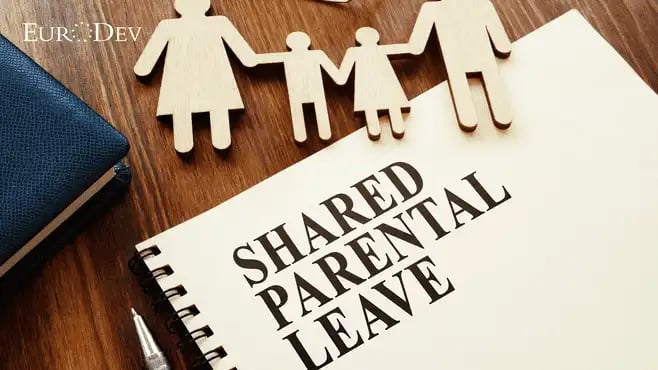
Historically, women have taken most of the parental leave, often resulting in longer career interruptions and slower salary progression. To change this, several European countries have introduced parental leave policies that encourage both parents to share caregiving responsibilities.
While equal parental leave alone cannot close the gender pay gap, it can help create more balanced opportunities for both parents at home and in the workplace.
Why parental leave matters for workplace equality?
Parental leave influences an employee's career development, income growth, and long-term workforce participation; therefore, it is not just impacting a person's family life.
When only one parent consistently takes periods away from work, they may face fewer opportunities for advancement and slower salary growth over time. As a result, many European countries have introduced policies designed to encourage both parents to take an active role in childcare.
Key objectives of these policies include:
- Encouraging shared caregiving responsibilities
- Supporting better work-life balance
- Promoting equal career opportunities
- Increasing workforce participation
- Creating more inclusive workplaces
Sweden: The benchmark for shared parenting
Sweden is often regarded as one of the world's leading examples of shared parental leave. Parents are entitled to 480 days of parental leave per child, with a portion reserved for each parent and unable to be transferred. This encourages both parents to take time off to care for their children.
The Swedish model is helping normalize parental leave for fathers and supporting a more balanced division of childcare.
Iceland: Equal leave for both parents
Iceland has built its parental leave framework around the principle that childcare should be shared equally between parents. Significant leave entitlements are allocated directly to each parent, encouraging both mothers and fathers to participate in caregiving.
The country's approach has made it one of Europe's most recognized examples of how parental leave can support workplace and family equality.
Norway: Encouraging fathers to take time off
Norway's parental leave model includes a dedicated quota for fathers, ensuring that a portion of leave is specifically reserved for them. If this leave is not taken, it cannot simply be transferred to the other parent.
Germany: A practical model for large European employers
Germany offers a practical approach that combines flexibility with financial support. Through the Elterngeld system, parents receive monthly benefits that encourage both partners to participate in childcare. Additional support is available when both parents share leave.
As one of Europe's largest economies, Germany provides a useful example for international employers looking to understand how parental leave can impact workforce planning and compliance.
Equal parental leave in practice
|
Country |
Key Characteristic |
Main Focus |
|
Sweden |
Non-transferable leave for each parent |
Shared caregiving |
|
Iceland |
Significant leave allocated to both parents |
Family and workplace equality |
|
Norway |
Dedicated father quota |
Encouraging paternal involvement |
|
Germany |
Financial incentives for shared leave |
Workforce participation and flexibility |
Table 1. Equal Parental leave in practice by country
What employers can learn from these approaches?
Although these countries use different models, several common themes stand out.
Modern parental leave policies are increasingly designed to support both parents, improve workforce participation, and create more inclusive workplaces. They can also contribute to employee retention and stronger employer branding.
For international employers, understanding local expectations around parental leave is becoming an important part of building competitive employment packages.
How Understanding Local Leave Policies Helps Companies Hiring in Europe?
Parental leave is an important compliance consideration. Leave entitlements, compensation levels, and employer obligations vary considerably between European countries. What works in one market may not meet legal requirements in another.
For companies expanding into Europe, understanding these differences can help:
- Stay compliant with local labor laws
- Build competitive benefit packages
- Support employee retention
- Reduce administrative complexity
- Strengthen employer reputation
The EuroDev Perspective: Equal leave is part of a larger workforce strategy
At EuroDev, we see parental leave as one component of a broader workforce strategy. While equal parental leave is not a complete solution to a problem as big as the gender pay gap, policies that encourage shared caregiving responsibilities can contribute to a more balanced and supportive working environment.
For companies hiring across Europe, understanding local parental leave requirements is essential. Regulations, employee expectations, and workforce practices differ significantly from country to country, making local expertise increasingly valuable.
Whether hiring through a local entity or an Employer of Record (EOR) solution, employers should ensure that their employment practices align with both compliance requirements and the expectations of today's workforce.
Written by the HR Outsourcing team at EuroDev.
Sources:
1. EU | Försäkringskassan
[www.forsakringskassan.se]
2. Ísland.is | Application for parental leave
[https://island.is/]
3. Government of Iceland | Social welfare and families
[https://www.government.is/]
4. Nordic cooperation | Parental benefit and parental leave in Norway [https://www.norden.org]

Related articles
-

What to Know About European EOR Services in 2026
Last updated: 6 October 2026Explore essential insights on choosing European EOR services, ensuring HR compliance, and building...
Read more -

How Much Does It Cost to Hire in Portugal in 2025?
Last updated: 15 June 2026Figure out how much it costs to hire in Portugal in 2025. Taxes and other employer obligations are...
Read more -

How Much Does It Cost to Hire in Spain in 2025?
Last updated: 3 March 2026Discover the true cost of hiring an employee in Spain in 2025, including payroll taxes, mandatory...
Read more