
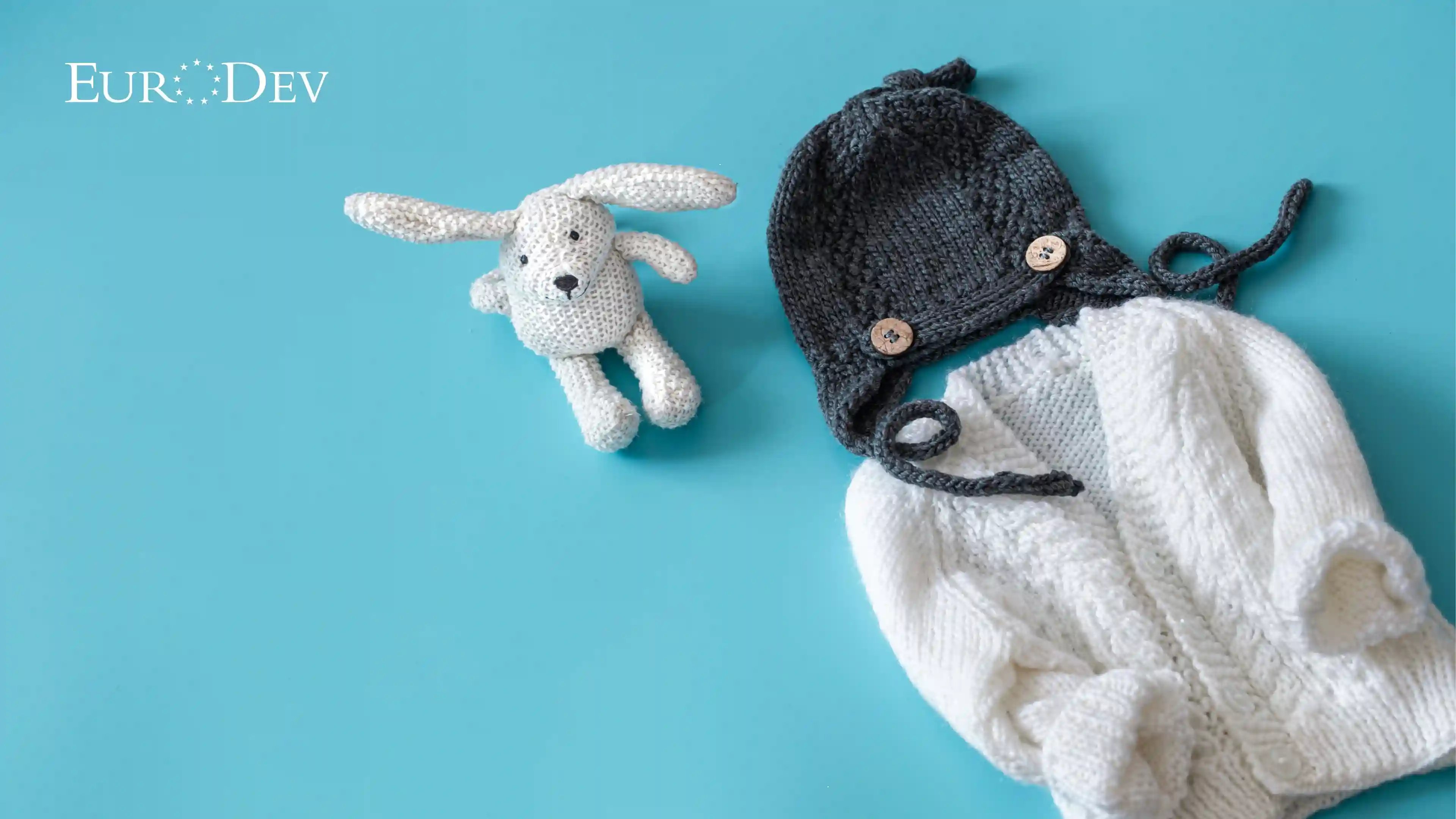
Europe remains one of the world's largest markets for baby and children's apparel. While birth rates have declined in many European countries, demand for baby clothing remains stable due to frequent replacement purchases, rising quality expectations, and growing interest in sustainable products. [cbi.eu]
For manufacturers and apparel brands looking to expand internationally, understanding consumer preferences and market dynamics is essential. Below, you'll find an overview of the key trends, leading markets, and growth opportunities shaping the European baby clothing industry in 2026.
Key Baby Clothing Market Trends in Europe (2026)
- Sustainable and organic babywear continues to gain popularity
- Parents increasingly prioritize comfort, safety, and durability
- E-commerce plays a growing role in baby apparel purchases
- Matching family outfits remains popular across social media channels
- Premium and environmentally conscious products are gaining market share
- Germany, France, Italy, Spain, the Netherlands, and the UK remain important markets
Table of Contents
- Why Is Europe an Attractive Market for Baby Clothing Brands?
- Which Trends Are Shaping the European Baby Clothing Market?
- Which European Markets Should Brands Prioritize?
- What Do European Parents Look for When Buying Baby Clothes?
- Final Thoughts
- How EuroDev Can Help
Why Is Europe an Attractive Market for Baby Clothing Brands?
Europe continues to offer strong opportunities for baby clothing manufacturers despite demographic changes.
Children's apparel accounts for a significant portion of the European apparel market, and industry forecasts indicate continued growth in the coming years. Children's wear currently accounts for approximately 13% of the European apparel market, with annual growth expected to remain at around 2%.
Several factors continue to support demand:
- Babies quickly outgrow clothing sizes
- Parents prioritize comfort and quality
- Children's clothing is frequently purchased as gifts
- E-commerce has made international brands more accessible
- Premium and sustainable products are increasingly popular
These factors create ongoing opportunities for brands entering the European market.
Which Trends Are Shaping the European Baby Clothing Market?
Sustainability and Organic Materials
One of the strongest trends in the European baby clothing market is the growing demand for sustainable apparel.
Parents are increasingly looking for:
- Organic cotton
- Chemical-free fabrics
- Ethically sourced materials
- Environmentally responsible production
Organic cotton remains one of the most popular materials due to its softness and suitability for sensitive skin. As sustainability becomes a larger purchasing factor, many brands are expanding their eco-friendly product lines.
Safety, Comfort, and Practicality
For babies and toddlers, purchasing decisions are often driven by functionality rather than fashion alone.
European parents typically value:
- Soft fabrics
- Easy-care products
- Comfortable fit
- Durable construction
- Washable materials
Safety, comfort, practicality, and washability continue to be among the most important purchasing criteria for younger children's clothing.
Social Media and Lifestyle Trends
Social media continues to influence purchasing behavior across the babywear sector.
Popular trends include:
- Family matching outfits
- Seasonal photoshoot collections
- Coordinated parent-child fashion
- Gender-neutral collections
Many fashion brands have expanded their children's ranges to align with broader lifestyle and family-oriented marketing strategies. [cbi.eu], [clothingdigest.com]
Growth of Online Shopping
E-commerce has become an important channel for baby clothing sales across Europe.
Parents increasingly use online platforms to:
- Compare products
- Read reviews
- Discover international brands
- Access specialized babywear collections
This trend creates opportunities for manufacturers that wish to enter multiple European markets without relying entirely on physical retail distribution.
Looking for Distribution Partners in Europe?
EuroDev helps consumer goods and apparel companies identify distributors, retailers, and market opportunities across Europe.
Contact us to discuss your European market entry strategy.
Which European Markets Should Brands Prioritize?
While opportunities exist throughout Europe, several countries continue to represent the largest and most attractive baby clothing markets.
Germany
Germany remains one of Europe's largest apparel markets and offers strong opportunities for babywear brands focused on quality, sustainability, and premium positioning.
France
French consumers place a strong emphasis on quality, comfort, and design, making France an attractive market for premium baby clothing products.
Italy and Spain
Both countries maintain well-established children's wear sectors and continue to offer opportunities for fashion-oriented and lifestyle-focused brands.
United Kingdom
The UK remains one of Europe's largest apparel markets, with strong e-commerce adoption and demand for both premium and value-oriented babywear products.
The Netherlands
The Netherlands is often considered an attractive entry market due to its international business environment, strong logistics infrastructure, and openness to new brands.
What Do European Parents Look for When Buying Baby Clothes?
Although preferences vary by country, several common purchasing factors influence buying decisions throughout Europe.
Parents typically evaluate products based on:
- Comfort
- Safety
- Quality
- Sustainability
- Practicality
- Value for money
At the same time, there is growing interest in:
- Organic fabrics
- Transparent supply chains
- Ethical sourcing
- Durable products designed for longer use
Brands that align with these priorities are often better positioned to attract both retailers and end consumers.
Final Thoughts
The European baby clothing market continues to present attractive opportunities for international apparel brands.
Key trends shaping the market include:
- Growing demand for sustainable babywear
- Increased interest in organic materials
- Continued growth of e-commerce
- Strong focus on comfort, safety, and quality
- Ongoing influence of social media and family lifestyle trends
Companies that combine quality products with thoughtful market entry strategies are often best positioned for long-term success in Europe.
How EuroDev Can Help
Expanding into Europe requires more than identifying customers.
EuroDev supports international companies through:
- Market research and market selection
- Distributor identification and outreach
- Sales outsourcing services
- Retail expansion support
- Local business development services
With over 29 years of experience helping North American companies expand into Europe, we provide the local expertise needed to accelerate growth and reduce market-entry risk.
Talk to our team about your European expansion plans.

Related articles
-
People Analytics: Transforming HR for European Expansion
Last updated: 18 September 2024Discover how people analytics can transform HR management, aiding companies in navigating the...
Read more -
Navigating Retail Recruitment and Employment in Europe's Top Markets.
Last updated: 30 August 2024Explore retail recruitment and employment, labor insights, and strategic hiring approaches in...
Read more -
Leveraging the European Hospitality Industry for Retail Success
Last updated: 24 May 2024Leverage the European hospitality industry to drive retail success by accessing a global customer...
Read more