
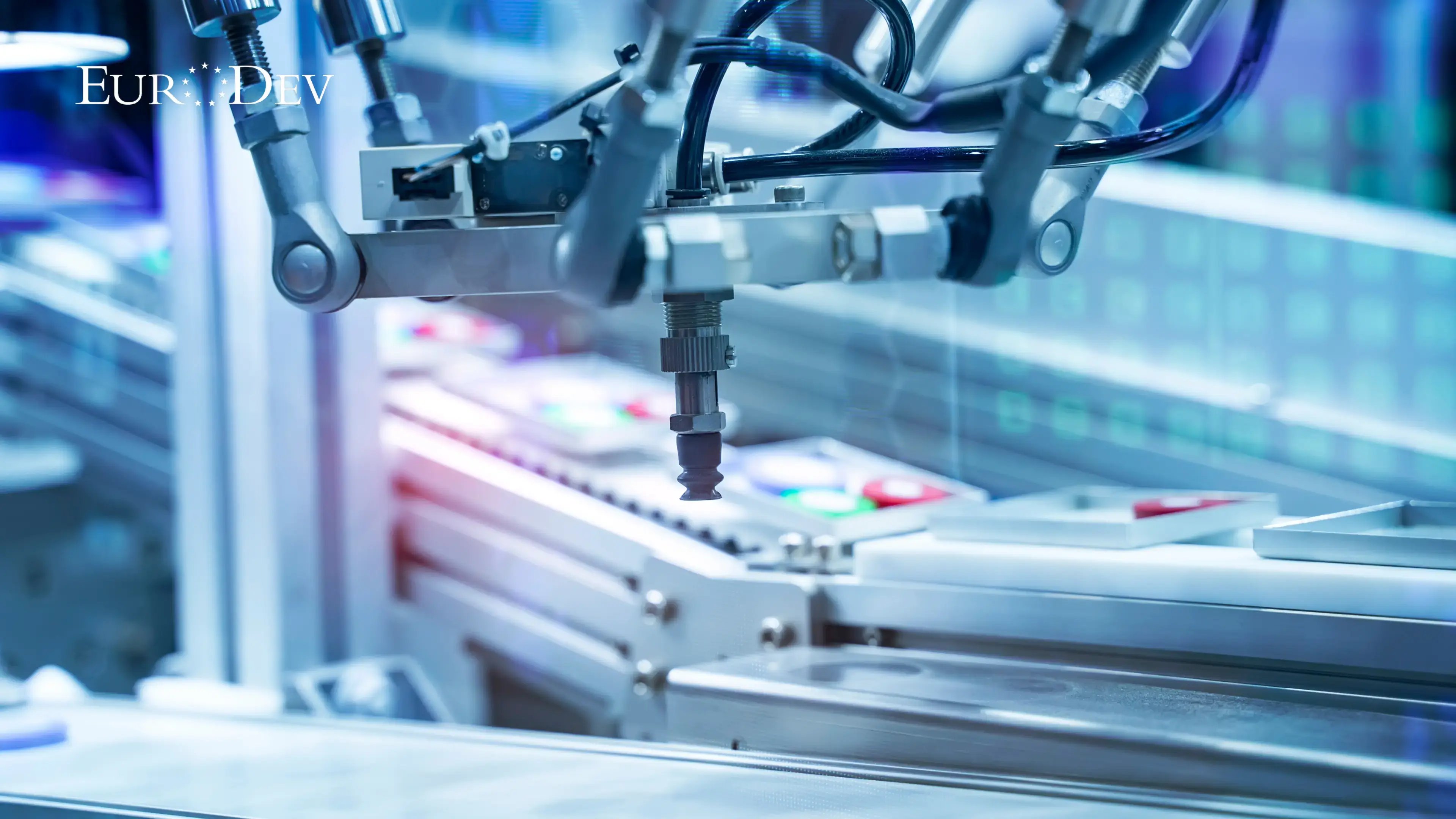
The medical device industry continues to evolve as healthcare systems become more digital, data‑driven, and patient‑centred. Rather than being defined by short‑term technological hype, the industry is increasingly shaped by long‑term structural changes, including regulatory pressure, digital transformation, and the need for more efficient healthcare delivery.
For companies operating in or entering the European market, understanding these developments is essential for aligning products, compliance strategies, and go‑to‑market models.
This article explores the key trends shaping the medical device industry and what they mean for manufacturers and healthcare providers.
Why is the medical device industry evolving?
The evolution of the medical device industry is driven by several structural factors:
- Increased demand for efficient and scalable healthcare
- Growing pressure on healthcare systems to reduce costs
- Rapid advances in digital technologies and data analytics
- Stronger regulatory frameworks, particularly in Europe
These drivers are pushing manufacturers to innovate not only in product design, but also in software, compliance, and supply chain strategies.
How is regulation shaping the medical device industry?
Regulation plays a central role in how medical devices are developed and commercialised, particularly in Europe.
Stricter frameworks place greater emphasis on:
- Patient safety and clinical evidence
- Post‑market surveillance and traceability
- Quality management across the entire lifecycle
As a result, manufacturers must integrate compliance into product development from the outset. Regulatory alignment is no longer a final step, but a continuous process that influences design, data management, and market access.
What role does digital health play in medical devices?
Digital transformation is changing how medical devices are developed and used in clinical environments.
Devices are increasingly connected, enabling:
- Real‑time data collection and monitoring
- Integration with hospital systems and electronic health records
- Remote patient management and telehealth solutions
This shift supports more proactive and personalised care models while improving operational efficiency within healthcare systems.
Why are AI and software becoming central to medical devices?
Artificial intelligence and software‑driven solutions are becoming core components of modern medical devices.
Software as a Medical Device (SaMD) is enabling:
- Advanced diagnostics and imaging analysis
- Clinical decision support tools
- Predictive modelling based on patient data
These capabilities allow healthcare providers to make faster, more accurate decisions while improving patient outcomes. At the same time, they introduce new regulatory and cybersecurity considerations that manufacturers must address.
How is cybersecurity impacting medical device development?
As devices become more connected, cybersecurity has become a critical requirement.
Manufacturers must ensure that devices:
- Protect patient data and system integrity
- Prevent unauthorised access
- Remain secure across connected healthcare environments
Cybersecurity is no longer simply an IT concern, but rather a core part of product design, regulatory compliance, and risk management.
What role does advanced manufacturing play?
Manufacturing processes in the medical device industry are becoming more flexible and technology‑driven.
Technologies such as additive manufacturing (including 3D printing) support:
- Faster prototyping and product development
- Customisation of devices for individual patients
- Greater resilience in supply chains
These developments allow manufacturers to respond more effectively to demand changes while maintaining product quality.
Bonus read: How to Activate a Medical Device Distributor Network in Europe
How are automation and robotics influencing healthcare delivery?
Automation and robotics are increasingly used to support healthcare professionals and improve operational efficiency.
In clinical and hospital settings, these technologies can:
- Assist with repetitive or resource‑intensive tasks
- Support surgical precision and rehabilitation
- Improve consistency in patient care processes
Rather than replacing healthcare professionals, automation is used to enhance productivity and reduce workload pressures.
What does this mean for companies entering the European market?
For international companies, particularly those from North America, these trends highlight the importance of:
- Integrating compliance and regulation into product development
- Adapting to digital healthcare ecosystems
- Ensuring cybersecurity and data integrity
- Aligning with healthcare system requirements across different European countries
Companies that understand both technological and regulatory dynamics are better positioned to succeed in Europe’s complex but highly attractive medical device market.
Key Takeaways
- The medical device industry is evolving through digital transformation, regulation, and healthcare system demands
- Regulation plays a central role in shaping product development and market access
- Digital health and connected devices are transforming healthcare delivery
- AI and software are becoming core components of medical device innovation
- Cybersecurity and data protection are critical requirements
- Advanced manufacturing and automation are improving flexibility and efficiency
Written by the MedTech & Life Sciences team at EuroDev.

Related articles
-
The 10 Mistakes US MedTech Companies Make When Entering Europe
Last updated: 27 August 2026Discover the 10 biggest mistakes US MedTech companies make when entering Europe, from MDR...
Read more -

MDR vs. FDA 510(k): Where U.S. Playbooks Break in Europe (and How to Fix Them)
Last updated: 2 March 2026Learn the key differences between FDA 510(k) and EU MDR, including classification changes, clinical...
Read more -
Expanding Non-Invasive Monitoring Tech into Europe: A Path for North American Innovators
Last updated: 26 August 2025Europe’s healthcare systems need scalable, non-invasive monitoring tools. Discover key...
Read more