
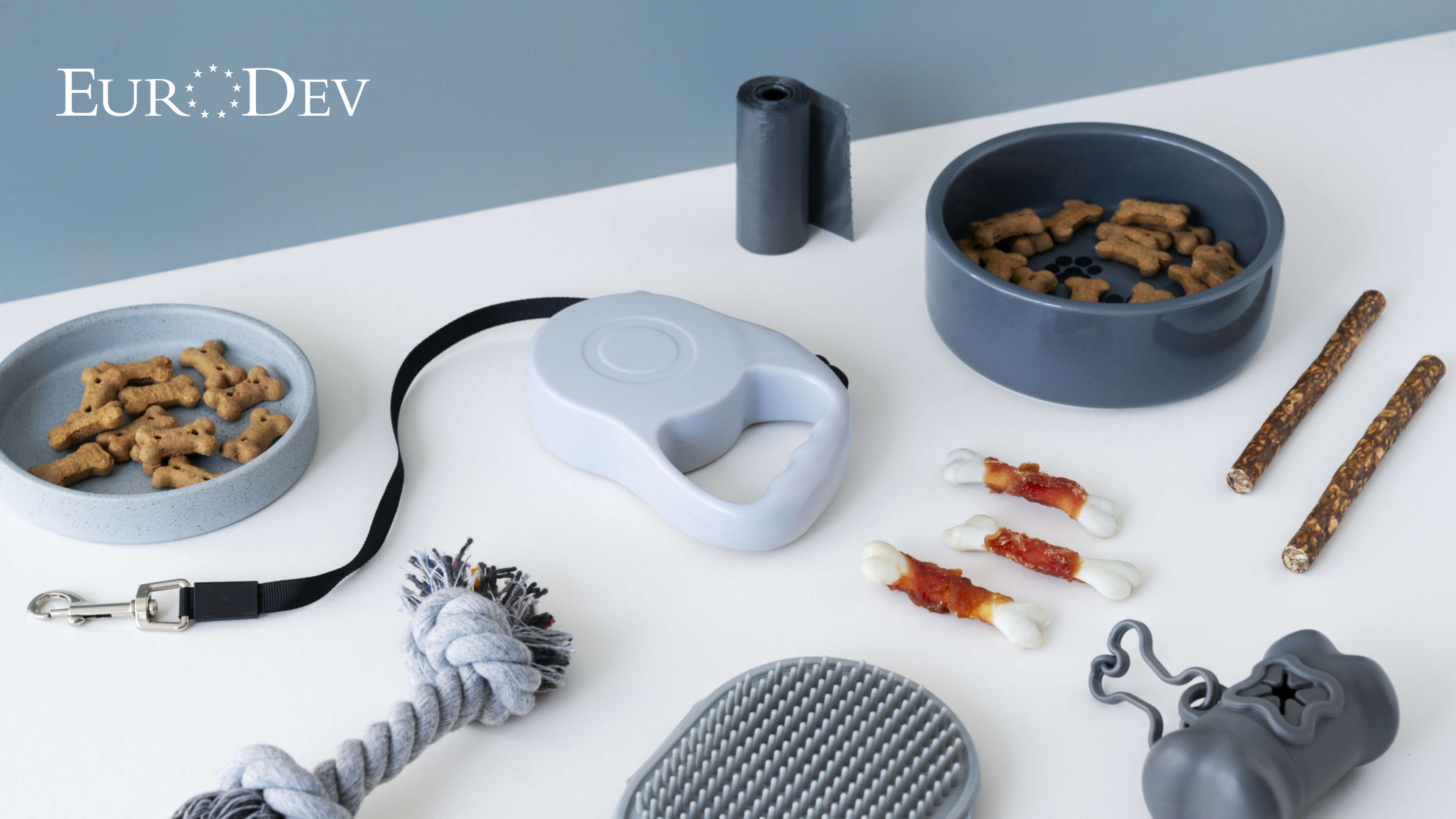
Market Size, Trends & Entry Strategy for North American Brands in 2026
The European pet care market, now valued at over USD 77 billion, continues to expand steadily, offering strong growth potential for U.S. and Canadian brands. Rising demand for premium, sustainable, and health‑focused pet products has made Europe one of the most attractive regions for market expansion in 2026.
This guide outlines the current market size, key growth trends, and practical entry strategies for North American companies considering expansion into Europe’s pet and veterinary sectors.
What Is the Current Size of the European Pet Care Market?
According to Market Data Forecast, the European pet care industry reached an estimated value of USD 77.5 billion in 2024 and is projected to exceed USD 81 billion by the end of 2025, with steady growth expected through 2033.
The Federation of European Pet Food Manufacturers (FEDIAF) reports that 139 million European households, nearly half of all households, own at least one pet.
European Pet Care Market Overview
| Year | Market Value (USD Bn) | Growth Trend |
| 2024 | 77.5 | Stable post-pandemic expansion |
| 2025 | 81.4 | Continued CAGR of 5 % forecast through 2033 |
What this means for North American brands
This is not an emerging or volatile market. Europe offers scale, stability, and predictable demand, making it particularly attractive for long‑term expansion strategies rather than short‑term experimentation.
Why Europe Is a Strategic Market for North American Pet Brands?
Europe is one of the world’s most mature pet care markets, combining strong consumer purchasing power, high regulatory standards, and an openness to premium imported brands.
Key advantages for North American companies
- High annual spend: European pet owners spend an average of €320 per pet per year on food, healthcare, and accessories.
- Demand for premium & natural products: U.S. and Canadian brands are well-positioned in organic, grain‑free, functional, and wellness‑focused categories.
- Structured market entry: Companies can enter Europe without setting up a legal entity by leveraging Sales Outsourcing and Employer of Record (EOR) models.
- Retail and distribution access: Established European retail chains and distributors actively seek differentiated, high‑quality international brands.
Decision‑maker takeaway
Europe rewards brands that enter with clear positioning and local execution, rather than relying on ad‑hoc distributor relationships.
Which European Markets Drive Pet Industry Growth?
Five key markets account for over 70% of total European pet care spending:
- Germany – Europe’s largest pet market with strong demand for dry food, functional nutrition, and veterinary products
- France – Growing interest in organic pet food and high‑end accessories
- United Kingdom – Fast adoption of digital, subscription‑based pet services and insurance
- Italy – Rising spending on veterinary services and professional pet care
- Spain – Expanding mid‑price segment, especially for cats and small dogs
What does this mean for the expansion strategy?
Most North American brands enter Europe through one or two core markets first, then scale regionally once product‑market fit and distribution are proven.
What Are the Key Trends Shaping the Market?
1. Premiumisation & Wellness
Pets are increasingly treated as family members. As a result, European consumers invest heavily in:
- nutritionally advanced pet food
- veterinarian‑approved products
- supplements and functional nutrition
Premium pet food sales grew 14% in Western Europe in 2023 alone.
2. Sustainability & Ethical Sourcing
Nearly 50% of European consumers are willing to pay more for sustainable pet products. Brands using recyclable packaging, transparent sourcing, and plant‑based ingredients typically achieve higher brand loyalty.
3. Digital & Smart Pet Products
E‑commerce adoption continues to rise, with online sales exceeding 35% of pet purchases in some European markets. Smart collars, connected feeders, and health‑monitoring devices perform particularly well in urban regions.
4. Veterinary Services & Pet Insurance Growth
Rising veterinary costs have accelerated pet insurance adoption—especially in Germany, Sweden, and the UK, where regulatory frameworks favor consumer protection and transparency.
Strategic insight
Brands that align product positioning with wellness, transparency, and sustainability gain faster retail acceptance and stronger margins.
Recent Industry News & Innovations
- UK launches lab‑grown meat dog treats: In early 2025, Pets at Home introduced cultivated‑meat pet treats, signaling rapid innovation in sustainable nutrition.
- Veterinary sector reforms in the UK: Proposed regulatory changes aim to increase pricing transparency in the £6.3 billion veterinary market.
- Stricter welfare regulations in Ireland: New breeding and traceability rules reinforce Europe’s focus on ethical sourcing and compliance.
Why this matters
Regulatory awareness and adaptability are critical for successful European market entry, especially in food, supplements, and veterinary products.
Supply Chain & Market Entry Considerations
Supply‑chain stability remains a key factor. Ongoing geopolitical pressures and raw‑material shortages continue to affect European sourcing.
For North American producers, this presents an opportunity to:
- position products as reliable, high‑quality alternatives, and
- support European partners facing local supply constraints.
Local market knowledge is essential when navigating:
- import compliance
- distribution agreements
- labeling and veterinary requirements across multiple EU states
How EuroDev Supports Pet Brands Expanding into Europe
Expanding into Europe involves navigating labor laws, regulatory compliance, hiring, and sales execution, often simultaneously.
Through Sales Outsourcing and Employer of Record (EOR) solutions, EuroDev helps brands:
- build a compliant European presence without setting up a legal entity
- identify and approach the right retailers and distributors
- hire and manage local European sales teams
- navigate EU labeling, product, and veterinary regulations
- develop a tailored, country‑by‑country go‑to‑market strategy
👉 Many pet brands start with a focused pilot market and scale once demand is validated.
How Pet & Veterinary Companies Have Successfully Entered the European Market
EuroDev has supported multiple North American companies in the pet and veterinary industries, covering consumer pet products, veterinary equipment, and specialized retail solutions.
Selected Pet & Veterinary Expansion Projects
Pet Consumer Products – Pawz Boots (USA)
Pawz Boots, a U.S.-based pet footwear brand, partnered with EuroDev to enter the European market and establish retail presence across multiple countries. EuroDev supported the company with market entry strategy, distributor outreach, and local sales development, enabling Pawz Boots to successfully introduce its products to European retailers and pet specialty stores.
A North American veterinary equipment supplier engaged EuroDev to expand sales operations in Europe without setting up a local legal entity. Through a Sales Outsourcing and Employer of Record (EOR) model, EuroDev helped the company build a compliant European sales presence and engage with distributors and veterinary clinics across multiple countries.
EuroDev also supported a U.S.-based pet product company with its European retail expansion by managing local sales representation, distributor outreach, and market‑specific execution. This approach allowed the brand to test and scale European markets while minimizing operational and regulatory risk.
Why this matters for North American brands
These projects show that pet and veterinary companies can:
- enter Europe without establishing a local legal entity
- access retailers, distributors, and veterinary partners faster
- remain compliant with EU labor and product regulations
- scale gradually with controlled risk and predictable costs
Key Takeaways for Decision Makers
- The European pet care market is projected to exceed USD 81 billion.
- Premiumisation, sustainability, and technology continue to drive growth.
- North American brands have strong opportunities across pet food, wellness, technology, and veterinary segments.
- A structured market entry model significantly reduces risk and accelerates time‑to‑market.
- Real‑world expansion projects show that brands can enter Europe without establishing a local legal entity.
- Acting in 2026 positions companies to capture market share while the market continues to consolidate.
Written by: Morgan Thiré, Retail Project Manager at EuroDev
Last updated: April 2026
Sources: FEDIAF, Market Data Forecast, Fortune Business Insights, Pacvue, Reuters, The Guardian

Related articles
-

People Analytics: Transforming HR for European Expansion
Last updated: 18 September 2024Discover how people analytics can transform HR management, aiding companies in navigating the...
Read more -

Navigating Retail Recruitment and Employment in Europe's Top Markets.
Last updated: 30 August 2024Explore retail recruitment and employment, labor insights, and strategic hiring approaches in...
Read more -

Leveraging the European Hospitality Industry for Retail Success
Last updated: 24 May 2024Leverage the European hospitality industry to drive retail success by accessing a global customer...
Read more