
The European aerospace industry is entering a new phase of growth driven by air traffic recovery, increased defence spending, digital transformation, and sustainability initiatives. For US aerospace manufacturers, technology providers, and component suppliers, Europe offers significant opportunities across both civil aviation and defence markets.
As major OEMs and Tier-1 suppliers ramp up production and invest in next-generation technologies, companies entering the European market must understand the trends shaping purchasing decisions, supply chains, and future innovation. Recent market research highlights aviation recovery, sustainability targets, digitalisation, and supply chain resilience as key drivers of growth across the sector.
Key Aerospace Industry Trends in Europe
The aerospace sector continues to evolve as manufacturers, suppliers, and governments invest heavily in innovation. Several trends are creating new opportunities for US companies looking to establish or expand their presence in Europe.
Digitalisation, AI, and Predictive Maintenance
Digital transformation remains one of the strongest forces shaping aerospace operations.
Aircraft manufacturers, airlines, and maintenance providers increasingly rely on:
- Artificial Intelligence (AI)
- Predictive maintenance systems
- Digital twins
- IoT-enabled sensors
- Advanced data analytics
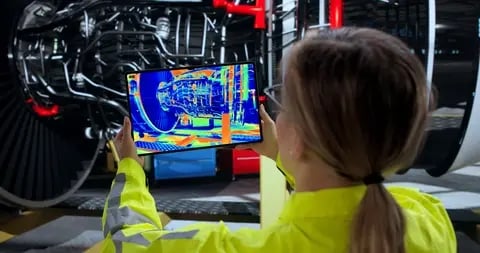
These technologies enable organisations to reduce downtime, improve operational efficiency, and optimise maintenance schedules. AI-driven analytics are also helping aerospace companies make faster engineering decisions and manage increasingly complex datasets. Similar trends are visible across European civil aviation programmes and next-generation aircraft development initiatives.
Sustainability and Zero-Emission Aviation
Sustainability continues to be one of the highest priorities for the European aerospace sector.
European initiatives such as Destination 2050 and various zero-emission aviation programs are accelerating investments in:
- Hydrogen-powered aircraft
- Sustainable Aviation Fuel (SAF)
- Lightweight composite materials
- Electric and hybrid propulsion systems
- Fuel efficiency technologies
The push toward decarbonisation is creating opportunities for suppliers that can contribute innovative technologies supporting lower emissions and improved aircraft performance.
Supply Chain Expansion and Resilience
Following years of disruption, aerospace manufacturers are actively strengthening and diversifying their supply chains.
Major OEMs and Tier-1 suppliers continue searching for specialised suppliers capable of supporting production increases, particularly in:
- Precision components
- Advanced materials
- Electronics
- Sensors
- Avionics
- Manufacturing automation
For small and mid-sized US companies, this presents a significant opportunity to become part of long-term European aerospace programmes and supplier networks. Supply chain resilience continues to be a major focus across the industry.
Electrification and Advanced Aircraft Technologies
Aircraft electrification continues to gain momentum across Europe.
Manufacturers are investing in:
- Electric aircraft systems
- More-electric actuators
- Advanced power electronics
- Energy management systems
- Hybrid-electric aircraft concepts
At the same time, the development of Urban Air Mobility (UAM), drones, and eVTOL platforms is creating demand for new technologies, components, and software solutions.
As aircraft become increasingly electrified, suppliers that specialise in power management, embedded systems, avionics, and software are well positioned to benefit from future growth.
Defence Spending Creates New Opportunities
One of the biggest developments in Europe is the significant increase in defence spending.
Countries across Europe are investing heavily in:
- Defence modernisation
- Missile systems
- UAVs and drones
- Cyber defence
- Command and control systems
- Aerospace defence technologies
Growing defence budgets are creating opportunities for aerospace manufacturers, component suppliers, system integrators, and technology providers that can support security and defence initiatives throughout the region. European defence industry growth has accelerated considerably in recent years.
What This Means for US Aerospace Companies
Europe's aerospace industry remains concentrated around major hubs such as France, Germany, Italy, Spain, and the United Kingdom, where many leading OEMs and aerospace organisations operate. These markets continue to attract investment while expanding supplier ecosystems.
For US companies looking to enter Europe, the strongest opportunities often exist in:
- Advanced manufacturing
- Aerospace software
- Avionics
- Sustainable aviation technologies
- Defence systems
- Sensors and electronics
- Predictive maintenance solutions
Companies that understand local market dynamics and build relationships with European aerospace stakeholders can establish long-term positions within highly specialised supply chains.
Future Outlook
The European aerospace industry is expected to continue growing as commercial aviation recovers, new aircraft programmes emerge, and governments invest in defence and sustainability initiatives.
Digitalisation, electrification, AI, and supply chain diversification will remain key priorities for aerospace organisations across the continent. For US manufacturers and technology providers, these developments create significant opportunities to expand into Europe and support one of the world's most advanced aerospace ecosystems.

Related articles
-

Our Tradeshow Journey Across Europe
Last updated: 27 October 2025From Caravan Salon to IBC, discover the insights, innovations, and trends shaping industries across...
Read more -

From Strategy to Success: EuroDev’s Crane Automation Win in Europe
Last updated: 27 August 2025Discover how EuroDev helped to bring advanced crane automation from Canada to Europe, securing a...
Read more -

Upcoming Aerospace & Defense Events + Paris Air Show Recap
Last updated: 18 July 2025Explore key takeaways from the Paris Air Show and discover what’s ahead in aerospace and defense at...
Read more